Is there any
hope for a fast Internet in Malawi? A topical question, indeed, that is asked
by the majority of Internet users in Malawi. The future of Malawi’s Internet is
fast. For the students, research and others in the education sectors in Malawi,
help is on the way through UbuntuNet, the high speed Internet network for
research and education in Eastern and Southern Africa.
No doubt. The
slow internet causes many inconveniences for business and personal users.
However, for students and researchers, Malawi’s slow internet is a tremendous
challenge as it could spell the difference between a failed project and a
success. The African research and education community has for far too long carried
the burden of slow Internet connectivity which has consequently widened the gap
between the continent’s researchers and their peers globally.
Realizing that research is the
core of any meaningful and sustainable development, the European Union
co-funded a 4 year project called the AfricaConnect. The AfricaConnect project
aims to establish an affordable high-capacity Internet network for research and
education in Southern and Eastern Africa to provide the region with a gateway
to global research collaboration. Malawi through the government is part of this
Initiative.
AfricaConnect Project is partly funded by the
European Commission’s DG Development and Cooperation – EuropeAid, in the
framework of the ‘ACP Connect’ programme of the African, Caribbean and Pacific
Group of States (ACP), which has injected €11.8 million (about MK700 Million)
of MK850 million (€14.75M) total budget of the project. The remainder is being
contributed by the African partners.
The
collaborative initiative is being coordinated by DANTE Ltd based in Cambridge,
UK, and partnered by UbuntuNet Alliance for Research and Education Networking,
Eastern and Southern Africa’s association of National Research and Education
networks (NRENs). Other parties participating in the project include the West
and Central African Research and Education Network (WACREN) – as well as the
Association of African Universities; existing National Research and Education
Networks in Africa (DRC, Ethiopia, Kenya, Malawi, Mozambique, Madagascar,
Namibia, Rwanda, Somalia, Sudan, South Africa, Tanzania, Uganda and Zambia);
and several European NRENs (Germany, Ireland, Italy, the Netherlands, Portugal
and the UK).
However, as
with any progress comes responsibility. Terms for AfricaConnect beneficiaries
include that the researchers and education institutions join together to form
National Research and Education Networks (NREN) and further harmonize at
regional level under UbuntuNet Alliance.
A major
immediate impact of the network to countries like Zambia that readily embraced
the project is that connectivity costs have dropped from a regional average of
$4000 per megabit per second per month to $135 per megabit per second per month
indicating a 97 percent price reduction in just four years!
“We
are delivering international and regional bandwidth to NRENs in these counties
at a consolidated price of $135 per megabit per second per month. I find this
exciting, because, at last we have eliminated one barrier to regional
participation in global research and education collaboration,” Says Chief
Executive Officer of UbuntuNet Alliance, Eng. Dr Tusu Tusubira.
Dr Tusubira
promises that the aim is to reduce connectivity to an average of less than $100
per month per megabit per second by 2017.
This network
offering high speed and yet affordable connectivity is extremely complex and
requires specialized human resources to manage the networks and connections in
all participating countries. To build a critical mass of well trained engineers
to manage he network, the AfricaConnect project in partnership with, the
International Network for Availability of Scientific Publications (INASP) and
Network Startup Resource Center (NSRC) and the Internet Society (ISOC) provides
capacity building initiatives to train engineers in all participating
countries.
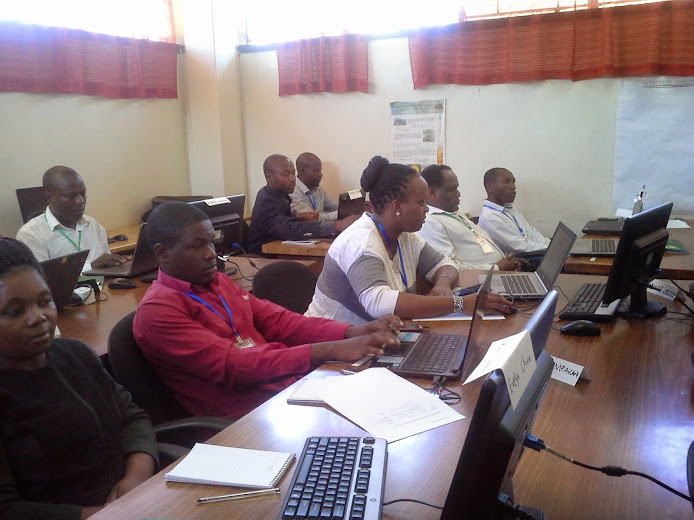
Since 2011,
over 40 network engineers from countries that include Malawi have been trained
in advanced routing. Some have been trained as trainers to help trickle down
the expertise they gain. Presently, peak 17 of the engineers that have been
able to replicate their skills by organising training workshops in their
countries are headed to Lusaka for further training at UbuntuNet-Connect 2014,
the annual conference of UbuntuNet Alliance. Though Malawi’s network engineers
failed to scoop this opportunity, there is hope for further training, next
year.
That said
the future of Internet in Malawi is certainly fast, especially for the research
and education sector. As a founding member of the UbuntuNet Alliance, Malawi
through the Malawi Research and Education Network (MAREN) having already
committed some funds to connect to the UbuntuNet network, remains to contribute
about MK100 million to meet its financial obligation as part of the Euro
280,000 required to start benefitting from the high speed connectivity, which
will enable Malawi to save millions.
AfricaConnect
has birthed a more reliable, secure, high-speed network that offers greater
connectivity between African countries, as well as high-speed links to the
pan-European GÉANT.
Economically,
the UbuntuNet network is gradually pushing countries in this Eastern and
Southern Africa towards realizing the MDGs through improved ICT.
Page of 3


